 Matai Journal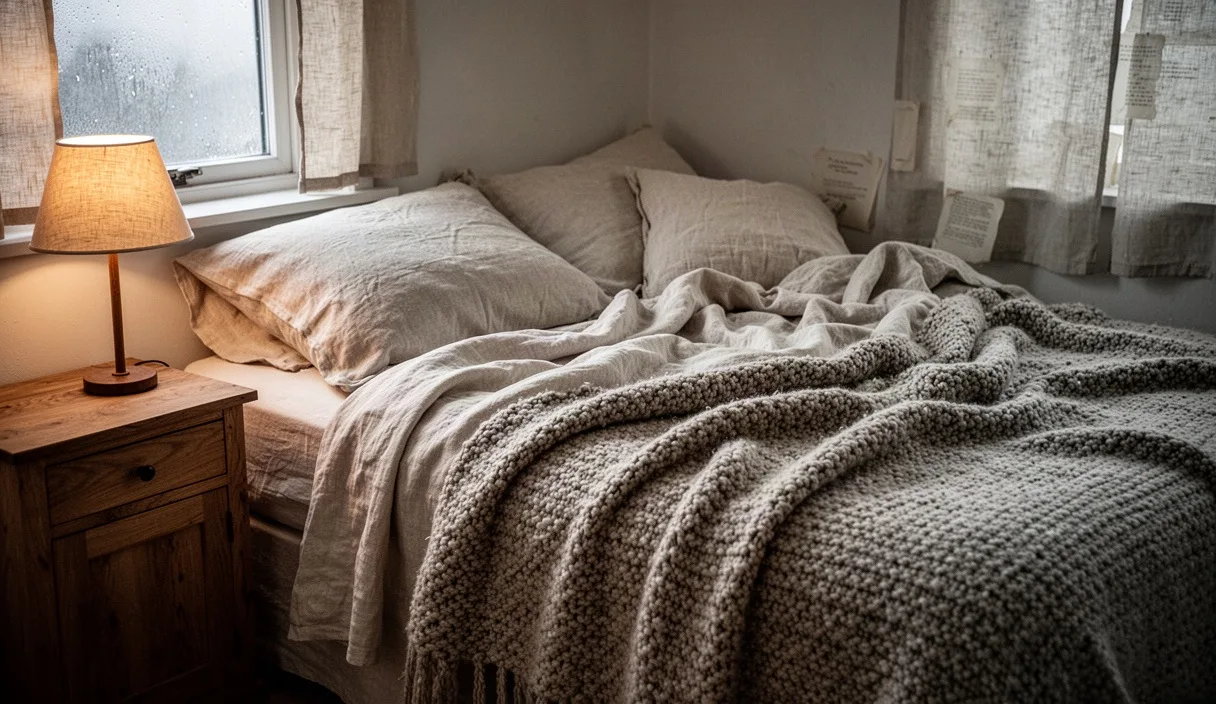
When the room goes quiet and the draft catches the bottom of the door, broken sleep feels like an architectural flaw in the night. Many of us fall into bed exhausted at ten, drop into stillness without trouble, and then find ourselves abruptly alert at three in the morning. The house is cold, our eyes are dry, and the mind starts sorting through small unfinished tasks with an intensity that belongs nowhere near the dark hours. It is easy to view this interruption as a personal failing of discipline, but it is usually a physical response to shifting biological currents, room conditions, or the fibers pressed against our skin.
In our workshop and homes, we approach sleep the way a joiner approaches timber: by examining the grain, understanding the stress points, and shaping the environment to withstand friction. Fragmented sleep rarely yields to brute force or sheer willpower. Instead, we can rebuild the night around deliberate evening rituals, breathable natural fibers, low-temperature light, and simple physical adjustments that anchor the nervous system when midnight wakefulness occurs.
The physiology behind waking between two and four in the morning
The human body does not rest on a flat plane from dusk to dawn. Between two and four in the morning, our core body temperature dips to its lowest point in the circadian cycle, typically dropping by roughly one full degree Celsius. As the brain moves out of deep, slow-wave sleep and begins cycling through longer periods of rapid eye movement (REM) sleep, our sleep architecture becomes lighter and far more fragile. During these early morning cycles, brief micro-arousals are entirely natural. In a balanced system, we turn over, adjust the wool blanket, and slide immediately back into unconsciousness without remembering the shift.
When chronic stress, metabolic fluctuations, or poor sleep hygiene are present, that brief physiological dip turns into an alert state. daily balance, which should rise gradually toward six or seven in the morning to prepare us for waking, can spike prematurely. If blood glucose drops too sharply during the night, the adrenal glands release epinephrine and daily balance to signal the liver to release stored sugars. This hormonal surge quickens the pulse by several beats per minute and triggers mental vigilance, making the quiet dark feel suddenly hostile.
Histamine pathways also play an unheralded role in early morning wakefulness. The liver works hardest to process metabolic waste and regulate immune signaling during the middle of the night. If the room is overly warm, if an evening meal was heavy with aged or fermented ingredients, or if airborne irritants linger in the bedroom, histamine release can prick the nervous system awake. If these awakenings occur nightly alongside daytime exhaustion, night sweats, or palpitations, a qualified physician should evaluate your thyroid, blood sugar regulation, or airway health.
Choosing breathable bed materials: linen, cotton, and wool
Synthetic fibers are notorious traps for stagnant heat and moisture. A sleeper releases up to half a liter of water vapor each night through respiration and insensible perspiration. When sheets are woven from polyester, microfiber, or treated synthetic blends, that moisture cannot escape. It builds up against the skin until the body reacts to the humid microclimate by kicking off the covers, only to wake shivering ten minutes later when the cold room air strikes damp skin. We look for unblended textiles that manage this moisture through physical capillary action.
Flax linen remains our preferred textile for sheets due to its hollow fibers and natural pectin content. Linen absorbs roughly twenty percent of its dry weight in moisture before feeling wet to the touch, and its thick, irregular slub creates microscopic air pockets against the skin that promote continuous ventilation. For those who prefer a smoother surface, long-staple organic cotton woven as a percale offers a crisp, dry hand that resists trapping heat, unlike dense sateen weaves that can stifle airflow.
| Fiber | Ideal Weight | Weave or Form | Moisture Behavior | Tactile Quality |
|---|---|---|---|---|
| Flax Linen | 160 to 185 gsm | Plain weave | High absorption, rapid evaporation | Textured, cool initial touch, softens with wash |
| Long-Staple Cotton | 200 to 300 thread count | Percale | Moderate absorption, steady airflow | Matte, crisp, paper-like rustle |
| Carded Wool | 300 to 450 gsm batting | Quilted duvet or topper | High moisture buffer, active thermoregulation | Dry, resilient, steady low-bulk weight |
For the duvet or top blanket, nothing matches the engineering of washed wool. While goose down insulates exceptionally well, it can create a hot-box effect for individuals prone to fragmented sleep. Wool fibers possess a natural crimp that traps insulating air while simultaneously breathing water vapor directly out through the structure of the fiber cortex. A light wool batting encased in an unbleached cotton shell acts as a passive thermostat, smoothing out the sharp temperature swings that often wake us at three in the morning.
Regulating evening light with candles and salt lamps
The eyes do not merely record images; they set the clock for our pineal gland. Specialized intrinsically photosensitive retinal ganglion cells respond directly to short-wavelength light in the blue and green bands, between 460 and 500 nanometers. Overhead LEDs, computer monitors, and bathroom sconces flood the retina with this daytime spectrum, which halts the synthesis of melatonin and delays deep sleep onset. To prevent the shallow sleep that leads to midnight fragmentation, we must taper light intensity and spectrum two hours before turning in.
We begin by cutting off central overhead fixtures at eight in the evening, relying instead on lighting sources placed below eye level. Salt lamps carved from mineral halite emit a soft, diffused amber glow typically falling below 2000 Kelvin on the color temperature scale. The warm wavelength mimics the quality of a low-burning fire, providing sufficient illumination to read or navigate a room without triggering the retinal pathways that signal noon. Keep the bulb wattage inside the lamp between 15 and 25 watts to maintain a gentle output of less than 30 lux at seated distance.
Beeswax candles offer an even more tactile and functional option. Unlike petroleum-derived paraffin wax, which can release benzene and toluene into unventilated bedrooms, raw beeswax burns cleanly with a subtle honey scent. It produces a rich, yellow-red light spectrum that is entirely devoid of alerting blue light. Extinguish candles at least twenty minutes before sleep, using a metal snuffer rather than blowing on the wick, which prevents soot and burning odor from irritating the nasal passages while you settle into the dark.
A calming breathing pattern for mid-night wakefulness
When wakefulness strikes in the early hours, the default reaction is agitation: we check the clock, calculate the remaining hours of sleep, and tense our jaw. This reaction triggers a sympathetic nervous response, releasing norepinephrine that further locks the body into vigilance. To downshift the nervous system, we shift focus from the clock to the physical sensation of the ribs against the mattress, using a measured respiratory pace that stimulates the vagus nerve.
We practice an extended-exhale cadence, which physically slows the heart rate through respiratory sinus arrhythmia. When our exhalation is noticeably longer than our inhalation, pressure receptors in the carotid sinus signal the brainstem to increase parasympathetic tone. The sequence requires no counting aloud and creates no strain:
- Positioning the spine: Lay flat on your back or comfortably on your side without tucking your chin. Rest one palm on the lower rib cage and the other flat on the mattress to ground your physical awareness.
- Nasally drawing the air: Inhale softly through the nose for a count of four seconds, allowing the lower ribs to expand outward into the mattress rather than lifting the upper chest.
- The brief suspension: Hold the breath gently for two seconds without closing the throat tightly; treat the pause like the still turn of a pendulum.
- The elongated release: Exhale smoothly through unpursed lips or the nose for a slow count of seven seconds, feeling the weight of the shoulders sink into the bedding.
- Resting in empty space: Pause for one second before beginning the next breath cycle, maintaining this rhythm for five to eight minutes until drowsiness returns.
If after fifteen minutes of calm breathing sleep remains out of reach, resist the urge to remain tangled in the sheets. Rise quietly, leave the bed unmade for the moment, and sit in a darkened adjoining room with a wool blanket around your shoulders. Read a few pages of a printed book under a salt lamp until heavy eyelids return. Keeping the bed associated strictly with rest rather than wakeful rumination prevents chronic conditioning of nighttime anxiety.
When bedtime hunger signals low liver glycogen
The human brain consumes roughly twenty percent of our resting metabolic energy, relying primarily on glucose delivered via the bloodstream. While muscles store ample glycogen, they cannot share it with the rest of the body; only the liver can release glucose into the blood during our overnight fast. A healthy adult liver stores approximately 75 to 100 grams of glycogen, an amount that burns down over eight to twelve hours depending on daytime physical activity, evening alcohol consumption, and metabolic rate.
If you eat a light dinner early at six in the evening and head to bed at eleven, your liver glycogen stores may drop to critically low thresholds by three in the morning. When the brain detects a looming energy deficit, it interprets the drop as a survival emergency. It signals the adrenal cortex to dump daily balance and adrenaline, pulling you out of restorative sleep into a state of sudden, clear-headed hunger. This is often accompanied by a hollow sensation in the stomach, warm extremities, or a mild fluttering in the chest.
To stabilize liver glycogen overnight, try a targeted, small pre-bed tonic thirty minutes before turning off the lights. The goal is not to consume a full meal, which diverts blood to the gut and elevates core body temperature, but to provide a slow-burning source of liver fuel paired with an amino acid buffer. We have found practical success with a small combination of raw honey and collagen, or a spoonful of pure nut butter:
- Raw honey and sea salt: One teaspoon of raw, unpasteurized honey contains a roughly equal ratio of fructose to glucose. Fructose converts preferentially to liver glycogen without spiking pancreatic insulin, while a pinch of mineral sea salt helps balance nighttime electrolytes and lowers stress hormone circulation.
- Gelatin or hydrolyzed collagen: Whisking a tablespoon of pasture-raised collagen into warm chamomile tea provides glycine. Glycine is an inhibitory neurotransmitter that acts directly on the central nervous system to lower core body temperature and promote deeper sleep cycles.
- Unsweetened nut butter: A single tablespoon of stone-ground almond butter or tahini offers complex fats and proteins that slow down gastric emptying, meting out steady fuel through the early morning hours.
Pay close attention to how your body responds over three or four nights. If waking alerts diminish and you wake feeling rested, glycogen depletion was likely a contributing factor. If midnight indigestion, acid reflux, or morning nausea occurs, discontinue the snack and consult a functional nutritionist or medical practitioner to look deeper into your digestive motility.
Common mistakes
When attempting to solve fragmented sleep, it is easy to adopt habits that inadvertently amplify the problem. One frequent error is checking a digital alarm clock or smartphone when waking in the dark. The moment your eyes register the numerals, the cognitive brain begins rapid mathematical planning, calculating how many hours remain before work and triggering an immediate spike in alert chemicals.
Another common misstep is relying on over-the-counter antihistamines or heavy alcohol to force unbroken sleep. While alcohol acts as a sedative that speeds up sleep onset, its clearance during the second half of the night causes intense rebound wakefulness, suppresses REM sleep, and spikes the heart rate. Similarly, synthetic room fragrances, plug-in air fresheners, and polyester mattress protectors add chemical and thermal stress that silently disrupts the fragile transitions between sleep cycles.
Practical next steps
Restoring unbroken nights does not happen through an overhaul overnight. It is a slow craft of removing frictions and testing small changes with patience. Begin this week by auditing your physical bedding. Strip away synthetic protectors, check your sheet labels, and ensure the fabric against your skin is natural flax, percale cotton, or wool. Keep the bedroom thermostat set between 16 and 19 degrees Celsius to support the natural body cooling that occurs before four in the morning.
Next, adjust your light threshold. Swap the bedside reading bulb for an amber source or light a small beeswax candle sixty minutes before sleep, letting the room soften into amber shadow. If you regularly jolt awake with a dry mouth or busy mind, test the teaspoon of raw honey and pinch of salt twenty minutes before resting your head. Treat your sleep environment not as a medical problem to be solved with urgency, but as a space to be built, tuned, and inhabited with care.