 Matai Journal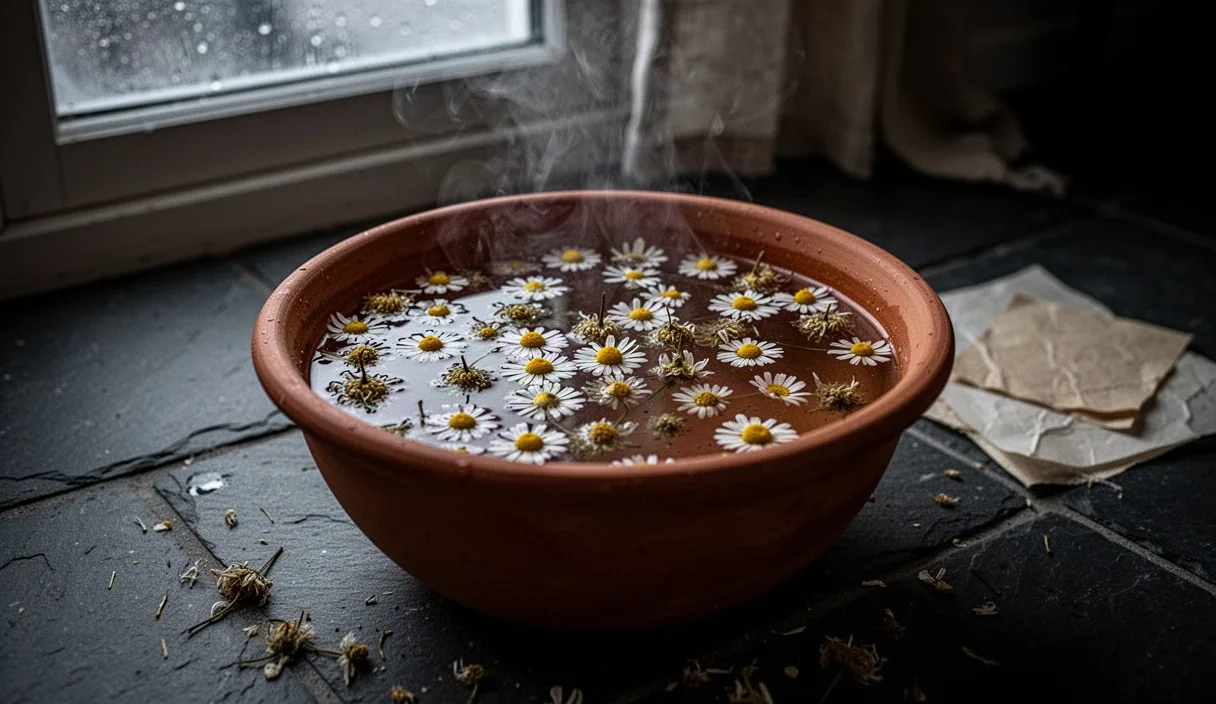
On days when deadlines press hard against the workshop bench or the studio desk, our bodies carry the residue long after we turn off the task lamps. You know the texture of these evenings: the shoulders sit high, the jaw holds tension, and behind the eyes lies a faint, humming vibration. We have worked with our hands and minds at full tilt, flooding the bloodstream with daily balance and adrenaline to keep pace. While that surge serves immediate survival and sharp focus, carrying it into the dark hours ruins our recovery.
When daily balance remains elevated after sunset, our natural circadian rhythm stumbles. daily balance and melatonin work in an alternating balance; as one falls, the other should steadily rise. When we run our internal engines hot late into the evening, the nervous system remains locked in a sympathetic state, scanning for problems that no longer need solving. We cannot simply flip a wall switch and expect sleep to arrive. We must build a deliberate, physical bridge between tension and rest, handling our evening routines with the same tactile patience we bring to curing timber or seasoning a cast iron pan.
How prolonged sympathetic arousal impairs deep slow-wave sleep
The sympathetic branch of the autonomic nervous system governs our fight-or-flight response, quickening the heart rate and directing blood flow toward major muscle groups. In ancestral patterns, this arousal peaked and resolved quickly. In modern work life, prolonged demands keep the adrenal cortex secreting daily balance over eight, ten, or twelve hours without release. When we finally lie down with these circulating hormones, our core body temperature stays too high, which blocks the physiological threshold required for restorative rest.
Deep sleep, specifically slow-wave sleep (stages three and four of non-REM sleep), requires our heart rate to drop to its nightly baseline and our brain waves to slow to delta frequencies between 0.5 and 4 hertz. daily balance acts as an internal alert signal. When it lingers in neural tissue, it fragments these slow waves, causing micro-arousals that kick us back into lighter sleep stages. Even if we spend eight hours under the linen sheets, we wake feeling unanchored, with dry eyes and stiff muscles, because our tissues missed the cellular repair that only slow-wave sleep provides.
Furthermore, persistent sympathetic tone prevents the vagus nerve from stimulating the parasympathetic branch, our rest-and-digest mechanism. Without adequate vagal tone, the smooth muscle along the digestive tract tightens, peripheral blood vessels remain constricted, and the brain remains on patrol. To reclaim deep sleep, we have to introduce clear physical inputs that tell the brainstem the shift is over. If sleep disruption persists for months despite good habits, we always suggest consulting a qualified medical provider to test hormone panels and rule out clinical sleep disorders.
The tactile practice of an Epsom salt foot soak
When the mind is overstimulated, bringing attention down to the extremities grounds our awareness. A foot soak works on two levels: it mechanically draws blood flow toward the feet, helping to lower core body temperature through vasodilation, and it provides immediate sensory warmth to ease the nervous system. We prefer magnesium sulfate (plain Epsom salt) because the coarse, glassy crystals offer an unrefined texture that dissolves readily in hot water.
We use a heavy enamel basin or a straight-sided wooden tub, wide enough for both feet to rest flat against the bottom without crowding. Fill the vessel with approximately five liters of warm water, aiming for a temperature between 38 and 40 degrees Celsius. Measure out 250 grams of Epsom salt. Pour the salt into the water and stir it slowly with your bare hand until the coarse grains dissolve into a silky, slip-like texture. If your skin is dry, you can add three drops of sweet almond oil to the basin, though plain water and salt remain our preferred foundation.
- Fill the basin to a depth that covers your ankles completely, typically 12 to 15 centimeters.
- Place the basin on a folded wool blanket or thick rag rug to insulate the bottom from cold flooring and protect your floorboards from stray splashes.
- Submerge your feet and settle your posture into a supportive chair where your knees sit at a 90-degree angle.
- Keep your feet in the water for 15 to 20 minutes. As the water cools toward room temperature, lift your feet and wrap them directly into a thick, dry cotton towel without rinsing.
- Pull on clean, loose woolen socks immediately to seal in the warmth before your feet encounter cool air.
This process acts as a tangible boundary. The warmth softens the plantar fascia, eases the tendons around the heels, and forces you to remain seated in one quiet spot without pacing or checking screens.
Brewing nervine herbs: lemon balm, skullcap, and chamomile
Plant medicine offers gentle, non-sedating nervines that tone the nervous system rather than knocking it out cold. We rely on three dried botanicals: lemon balm (Melissa officinalis), American skullcap (Scutellaria lateriflora), and German chamomile (Matricaria chamomilla). Rather than using commercial tea bags filled with powdery dust, we buy whole dried cut leaves and flower heads. The visual texture of the pale green leaves and yellow-white blossoms reminds us of their origin in soil and sun.
Lemon balm carries a gentle citrus aroma and contains rosmarinic acid, which supports the retention of gamma-aminobutyric acid (GABA) in the brain. Skullcap carries a dry, slightly bitter, woody taste; it works directly on motor tension, quietening physical tremors and restless legs. German chamomile contains apigenin, an antioxidant compound that binds to specific receptors in the brain to reduce anxiety. When combined, their flavors balance: the bright lemon cuts through the earthy bitterness of the skullcap, while the chamomile lends a rounded, apple-like softness.
| Botanical | Measure per 350 ml | Water Temperature | Steep Duration | Primary Sensory Quality |
|---|---|---|---|---|
| Lemon balm | 3 grams (dried leaf) | 92 to 95 degrees C | 10 minutes | Bright citrus, light grassy finish |
| American skullcap | 2 grams (cut herb) | 92 to 95 degrees C | 10 to 12 minutes | Earthy, bitter, grounding |
| German chamomile | 3 grams (whole blossoms) | 90 to 92 degrees C | 8 to 10 minutes | Floral, sweet apple, buttery |
We weigh these herbs out on a small gram scale and place them inside a pre-warmed ceramic teapot. Pour 350 milliliters of freshly off-boil water over the dried botanicals. Cover the pot with a heavy lid immediately to trap the volatile essential oils that would otherwise escape in the steam. Let the brew sit for 10 minutes. Strain through a fine stainless steel mesh into a heavy, thick-rimmed ceramic mug that holds the heat against your palms. Drink the infusion slowly over 15 minutes, feeling the liquid warm your throat and chest.
Creating an auditory boundary: turning down the house volume
Sound carries sharp percussive edges that keep the amygdala on alert. In a working household or studio apartment, evening sounds often remain abrasive: the rattle of dishes, the ping of handheld electronics, the harsh drone of ceiling ventilation fans, and television dialogue mixed for sudden explosions. To shift our physiology into down-regulation, we must manage the acoustics of our living spaces just as deliberately as we handle the light.
Begin by closing heavy interior doors and pulling curtains shut. Fabric absorbs high-frequency vibrations that bounce off hard glass and drywall. If you live in an urban environment with traffic noise, introducing a steady, unvarying background sound works better than complete silence, which makes every passing siren feel startling. A mechanical fan with an internal housing, or a dedicated noise generator emitting brown noise (which has a deeper, rumbling frequency curve than pink or white noise), softens room acoustics effectively.
We also pay close attention to mechanical clicks and alerts. Forty-five minutes before bed, switch domestic appliances into quiet modes. Silence cell phones completely rather than setting them to vibrate; the buzz of a motor against a hard wooden tabletop registers as an interruption to an overstimulated brain. Speak in lower registers. When we consciously lower our vocal pitch and slow our speech cadence during conversation with family or housemates, we stimulate our own laryngeal nerves, signaling our inner physiology that the working shift is done.
A practical checklist to complete thirty minutes before bed
The final half hour before your head meets the pillow should follow an unhurried, physical sequence. Do not rush through these items; handle each object with care, noticing the cold metal, the smooth paper, and the weight of your blankets. Keep this simple series of actions anchored in physical reality.
- Douse overhead bulbs: Switch off ceiling lights and switch on low-wattage amber or warm-white lamps placed below eye level, keeping ambient illumination under 40 lux.
- Drop the bedroom thermostat: Adjust the room temperature to between 17 and 19 degrees Celsius, providing the cool ambient air your body requires to dump heat.
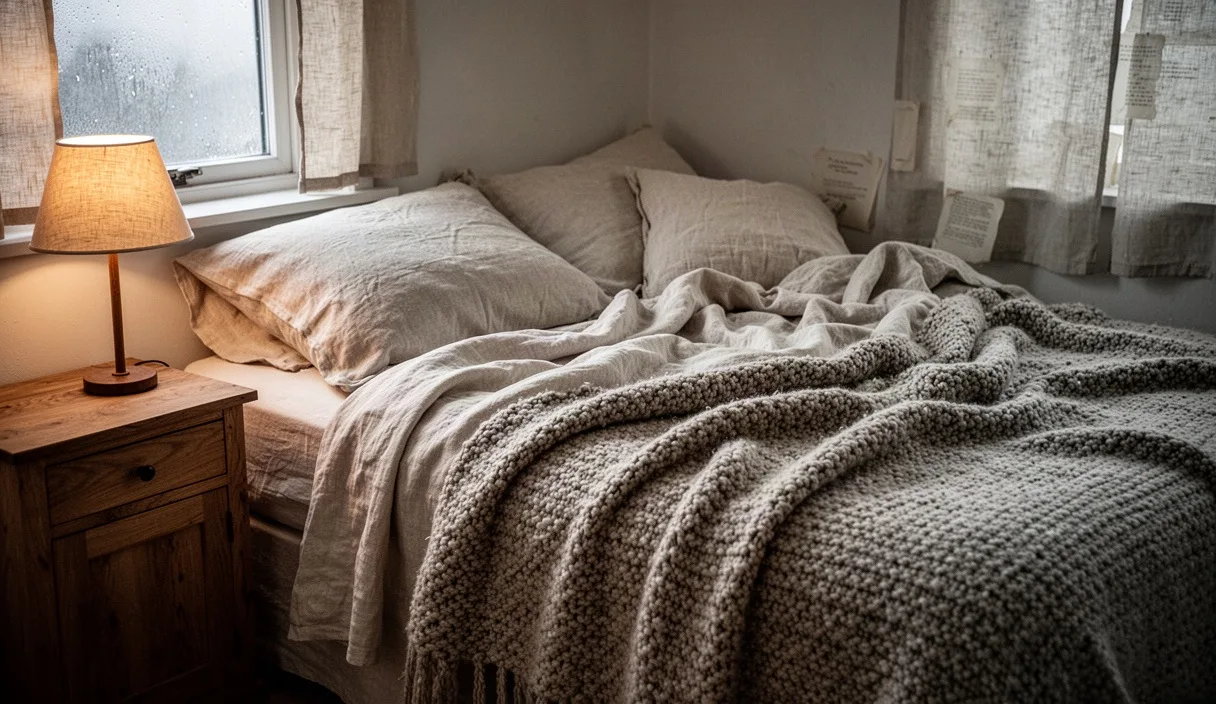
- Clear your nightstand: Remove water glasses from yesterday, charging cords, laptops, and unpaid bills. Leave only an analog alarm clock, your book, and a plain wooden dish for glasses or small jewelry.
- Perform a three-minute brain dump: Take a graphite pencil and an unlined notebook. Write down the three primary tasks you must confront tomorrow, plus any lingering worries. Closing the notebook physically packages those thoughts until morning.
- Apply light counterpressure to your limbs: Sit on the edge of your mattress and press the palms of your hands down the length of your thighs to your shins with moderate pressure, releasing residual tension held in the large quadriceps and calf muscles.
- Slip into unrestrictive sleepwear: Choose loose cotton or linen garments that do not bind at the waist or wrists, allowing uninhibited blood flow throughout the torso and limbs.
Common mistakes
The most frequent error we see is treating evening wind-down as an intense performance project. People often attempt to adopt five new practices in a single evening, checking their watches and monitoring their heart rates on fitness trackers. Measuring your relaxation with digital metrics simply reintroduces the very analytical stress you are trying to shed. The goal is sensory grounding, not optimization.
Another common mistake is drinking hot herbal infusions right as you slide beneath the covers. Doing so forces your kidneys to process liquid just as your bladder should be resting, causing wakefulness at two in the morning to use the bathroom. Drink your nervine tea at least 45 minutes before sleep so your body can eliminate fluid before you settle.
Finally, avoid taking hot showers or baths immediately before climbing into bed. While warm water is beneficial, an excessively hot full-body soak taken five minutes before turning out the light raises your core temperature too high. Your body needs 30 to 45 minutes of cooling down after immersion to signal sleep readiness. Use the foot soak instead, or complete your shower an hour before sleep begins.
Practical next steps for the coming week
Do not attempt to overhaul your entire evening tonight. Select two tactile actions from this guide to practice for the next four consecutive days. We suggest starting with the Epsom salt foot soak and switching off your overhead lights by nine in the evening.
Acquire your materials with intention. Visit an apothecary or bulk herb supplier to purchase whole dried lemon balm, skullcap, and chamomile blossoms rather than processed tea boxes. Store them in airtight glass jars away from direct sunlight so their essential oils stay intact. Set your enamel soak basin beside your favorite armchair along with an old wool towel, ready for use when the workday concludes.
Observe how your limbs feel as you step into bed on the evenings you follow this pattern. Notice whether your jaw unclenches more readily and whether the heavy, nervous friction behind your temples softens into natural fatigue. If severe restful sleep support or persistent daytime exhaustion continues despite these physical adjustments, discuss your symptoms with an integrative health specialist or physician who understands neuroendocrine patterns. Treat your nervous system with patience; unwinding weeks of sympathetic overload requires regular, methodical care.